

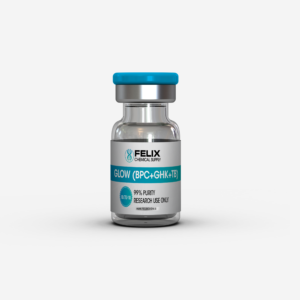
KLOW Peptide 80 mg is a multi-peptide research blend typically formulated from four separate peptides: GHK-Cu (50 mg), BPC-157 (10 mg), TB-500 (10 mg), and KPV (10 mg), giving a total labeled content of 80 mg per vial. It is not a single peptide or a new chemical molecule; it is a co-formulated combination of four compounds.
The rationale behind KLOW is to bring together several areas of preclinical peptide research. GHK-Cu, a copper-binding tripeptide, is studied in connection with extracellular-matrix remodeling, collagen production, and skin/tissue biology. BPC-157 has primarily been investigated in laboratory and animal models involving connective-tissue and gastrointestinal repair. TB-500, commonly described as a thymosin-beta-4 fragment, is associated with research into actin regulation, cell migration, and wound-healing processes. KPV, a short tripeptide derived from α-MSH, has been investigated for anti-inflammatory and immune-signaling effects.
Because these compounds have different biological mechanisms, KLOW is marketed as a tissue-repair and inflammation research blend. However, an important distinction is that evidence for the individual ingredients should not be interpreted as evidence that the combined KLOW formulation produces the same effects. Available sources indicate that the four-peptide KLOW combination itself has not been adequately evaluated in controlled human clinical trials. Consequently, there is no scientifically established human dosage, treatment schedule, or proven therapeutic benefit for the complete blend.
The 80 mg specification refers to the total amount of peptide material in the vial, rather than an established human dose. The commonly reported ratio is 5:1:1:1: 50 mg GHK-Cu and 10 mg each of BPC-157, TB-500, and KPV. Some suppliers publish batch-specific certificates of analysis (COAs) showing purity and identity testing, but the actual analytical results can vary between manufacturers and lots.
KLOW is generally sold as a lyophilized research material and is commonly labeled for research use only, not for human or veterinary use. It should therefore not be regarded as an approved medicine or as a substitute for clinically validated treatment. Claims about healing, anti-aging, injury recovery, or other therapeutic outcomes should be treated cautiously unless supported by appropriate human clinical evidence.


Reviews
There are no reviews yet.